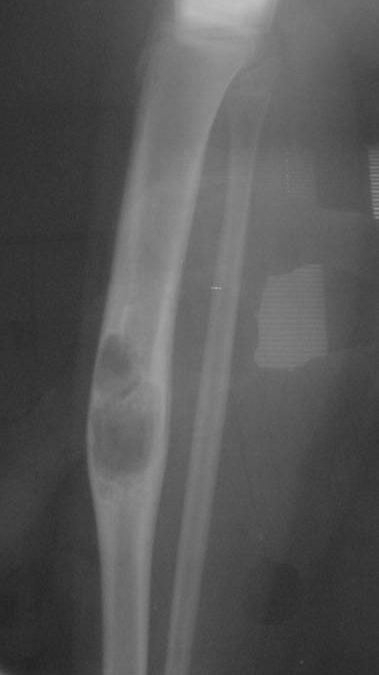
An Aneurysmal Bone Cyst (ABC) is a rare, benign but locally aggressive bone lesion that can cause bone destruction and expansion. Despite its name, it is not a true cyst and does not contain blood vessels in the same manner as an aneurysm. Instead, it consists of blood-filled cavities separated by thin walls of bone and fibrous tissue.
ABCs most commonly affect children, teenagers, and young adults, typically appearing during periods of rapid bone growth. While they are benign, these lesions can grow quickly and cause pain, swelling, and even fractures, which is why early diagnosis and treatment are essential.
Understanding how an aneurysmal bone cyst develops, how it is treated, and what the recovery process looks like can help patients and their families feel informed and reassured throughout the care process.
What Is an Aneurysmal Bone Cyst?
An aneurysmal bone cyst develops when abnormal blood flow within the bone leads to the formation of multiple blood-filled spaces. These cavities expand and weaken the bone from the inside, creating a balloon-like appearance on imaging studies.
ABCs can occur in almost any bone in the body, but are most often found in the spine, pelvis, and long bones of the arms and legs. Although the exact cause is not always known, some ABCs are associated with other underlying bone lesions, such as giant cell tumors or chondroblastomas.
For a more detailed overview of this condition, visit the Aneurysmal Bone Cyst (ABC) page on the Tumor Surgery Network.
Symptoms and Diagnosis
Common symptoms of an aneurysmal bone cyst include:
- Pain or tenderness at the site of the lesion
- Swelling or a visible lump
- Decreased range of motion if near a joint
- Pathologic fracture (fracture through weakened bone)
Diagnosis begins with imaging tests such as X-rays, MRI, or CT scans, which can show the characteristic “soap-bubble” appearance of an ABC. However, because other conditions can appear similar, a biopsy is typically performed to confirm the diagnosis and rule out more serious tumors.
Treatment Options
The goal of treatment for an aneurysmal bone cyst is to remove or destroy the lesion while preserving as much normal bone and function as possible. Treatment options include:
- Curettage and bone grafting: The cyst is scraped out, and the cavity is filled with bone graft material to support healing.
- Cryosurgery or cauterization: The lesion’s inner lining may be treated with freezing (cryotherapy) or cauterization to destroy any remaining abnormal cells.
- Resection: In some cases, a portion of the affected bone may be surgically removed if the cyst is large or recurrent.
- Minimally invasive options: Some ABCs can be treated with image-guided injections that block the lesion’s blood supply or induce scarring.
The specific approach depends on the cyst’s size, location, and proximity to critical structures such as nerves or joints.
Recovery and Prognosis
Most patients recover well after treatment for an aneurysmal bone cyst. Pain typically improves soon after surgery, and bone strength gradually returns as healing progresses.
Physical therapy may be recommended to restore mobility and function, especially if the lesion was located near a joint. Regular follow-up imaging is necessary because recurrence can occur in approximately 10–20% of cases, especially in younger patients or after incomplete removal.
Overall, the prognosis for ABCs is excellent, and most individuals can return to normal activities once healing is complete.
Learning More About Bone Tumors and Treatment
Aneurysmal bone cysts highlight the importance of accurate diagnosis and timely surgical care. To explore more about these and other bone lesions, visit the Bone Tumors and Diagnosis & Treatment sections on the Tumor Surgery Network.
These educational resources provide trusted information for patients, families, and clinicians seeking to understand bone tumor management and modern orthopedic oncology techniques.
Conclusion
While an aneurysmal bone cyst is a benign condition, its aggressive growth can cause significant discomfort and structural damage if left untreated. Through proper diagnosis, advanced surgical techniques, and ongoing follow-up care, patients can achieve a full recovery and return to their normal activities.
The Tumor Surgery Network remains committed to providing accurate, accessible, and compassionate information to help patients and families navigate their bone tumor journey with confidence.